AI
Podcast: The Future of Web Apps: Will AI Agents Generate UIs on the Fly?

Rachel Lee Nabors, a former core member of the React team, discusses the architecture and philosophy behind local-first applications in the podcast episode "The Future of Web Apps: Will AI Agents Generate UIs on the Fly?". The bottom line: small language models (SLMs) running directly on-device can be a more private, lower-latency, and cost-effective alternative to calling LLMs over the cloud.
What are local-first and SLM?
Local-first means applications are designed so that data and the primary processing live on the user's device first, rather than immediately on a server. An SLM is a smaller version of a language model that can run on-device, as opposed to the large LLMs that must be accessed via a cloud API.
Advantages of on-device SLM
- Privacy: data stays on the device, reducing exposure to external servers.
- Low latency: faster responses because there's no round trip to the cloud.
- Lower operational costs: reduces paid API calls to large models.
However, there are trade-offs: limited compute and storage on devices, challenges with updating models, and differences in capability between SLMs and large LLMs. Nabors discusses how architecture and application philosophy can balance these aspects so the user experience remains smooth.
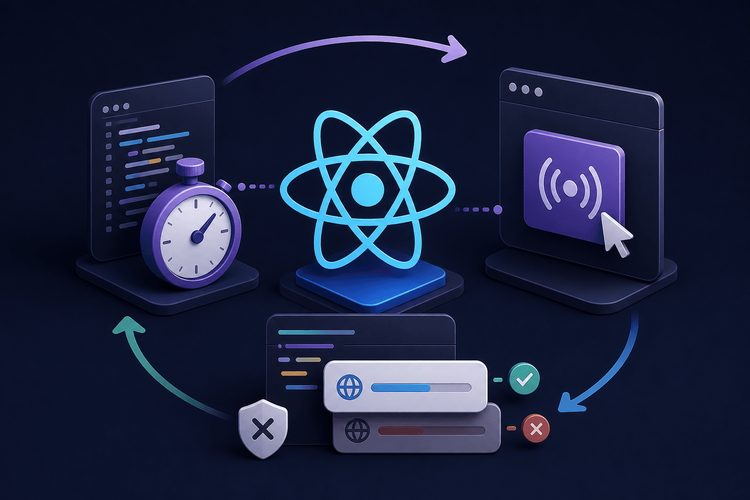
One interesting topic from the discussion is AI agents that can assemble or modify UIs dynamically on-device—without sending data to the cloud. If an SLM is powerful enough for simple interface tasks, developers can deliver experiences that are fast, personalized, and more secure.
For you as an app developer or product owner in Indonesia, the local-first approach with SLMs opens opportunities to offer AI features that are more private and cost-effective, especially in markets with limited connectivity or high cloud costs. Hybrid strategies and technical considerations are still needed to ensure performance and maintainability.
Category
AI
Share